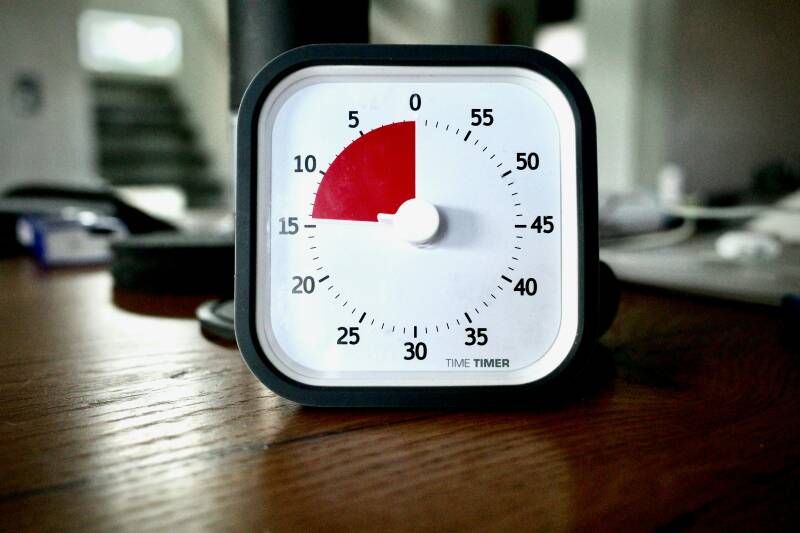
Photo by Ralph Hutter on Unsplash
Series: Recruitment, AI & HR in the hospitality industry · Post #26 of 90
#Hospitality #Catering #Minijob #SkilledWorkers #HRManagement #FutureOfWork #Employment Law #Hospitality #Management #HR #Time Tracking
The time clock is back, but smarter
What the 2026 electronic time-recording requirement really means, and why it is more of an opportunity than a burden
One of the last articles on this blog discussed the unusual convergence of new administrative tasks and regulatory requirements currently affecting hoteliers and hospitality businesses, ranging from the ‘minijob’ reform to the European AI Act. One of these tasks deserves closer scrutiny in its own right, because it is different from most: it is not a new obligation. It is a very old obligation that is now finally being given a clear framework. We are talking about electronic time recording.
What actually applies in law, and what is yet to come
First of all, here is a clarification that should come as no surprise to any of your colleagues: the obligation to record working hours is not a distant prospect. It has been in force since the European Court of Justice’s so-called ‘time clock’ ruling of 14 May 2019, which obliges Member States to require employers to set up an objective, reliable and accessible system for recording daily working hours (ECJ, 2019). The Federal Labour Court expressly confirmed this obligation for Germany in September 2022 and derived it directly from Section 3(2)(1) of the Occupational Safety and Health Act, interpreted in accordance with EU law (BAG, 2022). One misconception persists: that time recording is optional or will only become mandatory with a new law. In fact, the obligation already applies today, regardless of the size of the business or the sector; it is worth clarifying this before we move on to the actual change.
What will change in 2026 is not the ‘if’, but the ‘how’. Since June 2026, a draft bill from the Federal Ministry of Labour and Social Affairs to amend the Working Hours Act has been available, which codifies in law the obligation that had previously been derived solely from case law. Under the proposed Section 16(2) of the draft Working Hours Act, the start, end and duration of daily working hours must be recorded electronically on the day the work is performed (BMAS, 2026). The recording itself may be carried out by employees or by third parties; however, legal responsibility for completeness and accuracy always remains with the employer. For employees, the draft also provides for a right to access and obtain copies of their own recorded working hours, as well as a minimum retention period of two years.
Staggered transition periods have been provided for the changeover, which are particularly relevant for the hotel industry with its high proportion of small and medium-sized businesses: in principle, up to one year after the legislation comes into force; two years for businesses with fewer than 250 employees; and five years for businesses with fewer than 50 employees. Opening clauses in collective agreements may permit alternative recording methods, including non-electronic or time-delayed recording; this is a point that should be examined more closely for establishments in the hospitality sector bound by collective agreements. Trust-based working hours remain expressly permitted; however, the employer must continue to ensure that they are made aware of any breaches of the statutory maximum working hours and rest periods, meaning that a documentation requirement also continues to apply here. The legislative process itself is still at an early stage; adoption later in 2026 is considered likely, but is not yet definitively confirmed at this stage.
For the hospitality sector, with its rotating shifts, split shifts and seasonal peaks, this clarification is particularly relevant, precisely because irregular working hours are more commonplace in this sector than in almost any other, and maintaining comprehensive, up-to-date documentation is far more challenging here than in a traditional office environment with fixed core working hours.
From audit risk to management tool
So much for the legal situation. Now let’s shift our perspective, because anyone who views this obligation solely as yet another compliance risk to be minimised is failing to capitalise on its true value for their own management work.
Whether intended or not, time and attendance records generate reliable data on how a business actually operates, rather than how it is supposed to operate on paper. Anyone wishing to know which department is structurally overburdened, which shifts regularly result in overtime, and which commitments made to the team are actually being honoured will find in this data a basis that is more robust than any gut feeling from the weekly team meeting. This is not at odds with good leadership; it is a prerequisite for basing sound leadership decisions on something other than mere assumptions.
This perspective takes on greater significance when considered alongside the expectations of the employees themselves. Younger skilled workers increasingly expect transparency regarding the hours they have worked – not out of mistrust, but because, for them, traceability is a fundamental and self-evident basis of fairness. From this perspective, a right to information, as provided for in the draft bill, is not a bureaucratic concession, but the formalisation of a trust that good leadership should have established long ago. Where time recording is communicated openly and introduced not as a tool of control against employees, but as a tool to protect them, a legal obligation becomes a visible signal: The time this person has worked is recognised, documented and taken seriously.
Even trust-based working hours, which are often misunderstood as the opposite of time recording, lose none of their value as a result. They merely shift from a tacit waiver of control to a consciously granted freedom, the framework of which is documented and thus also protective, for managers as well as for employees.
For management, this means moving away from the notion that time tracking is a step backwards to an era of time clocks and mistrust. It is, in fact, quite the opposite: one of the few current regulatory obligations which, when properly implemented, can be directly translated into a better understanding of one’s own business and into noticeably greater fairness towards the people who keep that business running every day.
How well does your organisation currently understand your team’s actual – rather than planned – working hours, and what would change if, from tomorrow, this data were visible to everyone and reliable?
Sources
Court of Justice of the European Union. (2019). Judgment of 14 May 2019, Case C-55/18, CCOO v Deutsche Bank SAE (‘Time Clock Judgment’). Official Journal of the European Union.
Federal Labour Court. (2022). Order of 13 September 2022, Ref. 1 ABR 22/21. https://www.bundesarbeitsgericht.de
Federal Ministry of Labour and Social Affairs. (2026). Draft bill amending the Working Hours Act and other provisions, Section 16(2) ArbZG-E, as at June 2026.
Federal Ministry of Labour and Social Affairs. (2023). Draft bill amending the Working Hours Act, first version dated 27 March 2023.
Rhein-Neckar Chamber of Industry and Commerce. (2026). Working time recording 2026: Obligations, current legislation and court rulings. https://www.ihk.de/rhein-neckar/recht/arbeitsrecht/arbeitszeiterfassung-5631422
Occupational Safety and Health Act (ArbSchG) Section 3(2)(1).
Note: At the time of publication, the draft bill is at an early stage of the legislative process; details regarding deadlines and fines are subject to change. Please check the current status before taking measures.
Kommentar hinzufügen
Kommentare